
How Continuous Improvement Drives Production

Are you looking for ways to optimize your production processes, reduce waste, and increase overall efficiency? Continuous improvement is the answer. By implementing a culture of ongoing evaluation and refinement, businesses can achieve significant gains in productivity and profitability. This isn’t a one-time fix, but rather a commitment to constantly seeking better ways to operate. Think of it as a journey, not a destination.
Key Takeaways:
- Continuous improvement fosters a culture of ongoing optimization, leading to increased production efficiency.
- Methodologies like Lean and Kaizen provide frameworks for identifying and eliminating waste in production processes.
- Data-driven decision-making and regular evaluation are crucial for successful continuous improvement initiatives.
- Investing in training and empowering employees to contribute to improvement efforts is essential for long-term success.
Understanding How Continuous Improvement Impacts Production
At its core, continuous improvement is about making small, incremental changes over time that lead to substantial improvements in the long run. This philosophy embraces the idea that there’s always room for improvement, no matter how well a process is currently performing. In the context of production, this means constantly evaluating every aspect of the manufacturing process, from raw materials to finished goods, to identify areas where waste can be reduced, efficiency can be increased, and quality can be improved. For instance, it could involve streamlining the assembly line, optimizing inventory management, or implementing new technologies to automate repetitive tasks. It’s about relentlessly pursuing excellence in every aspect of the production process. Some business get up to 100 gb after continuous improvement implementations.
Implementing Continuous Improvement Methodologies in Production
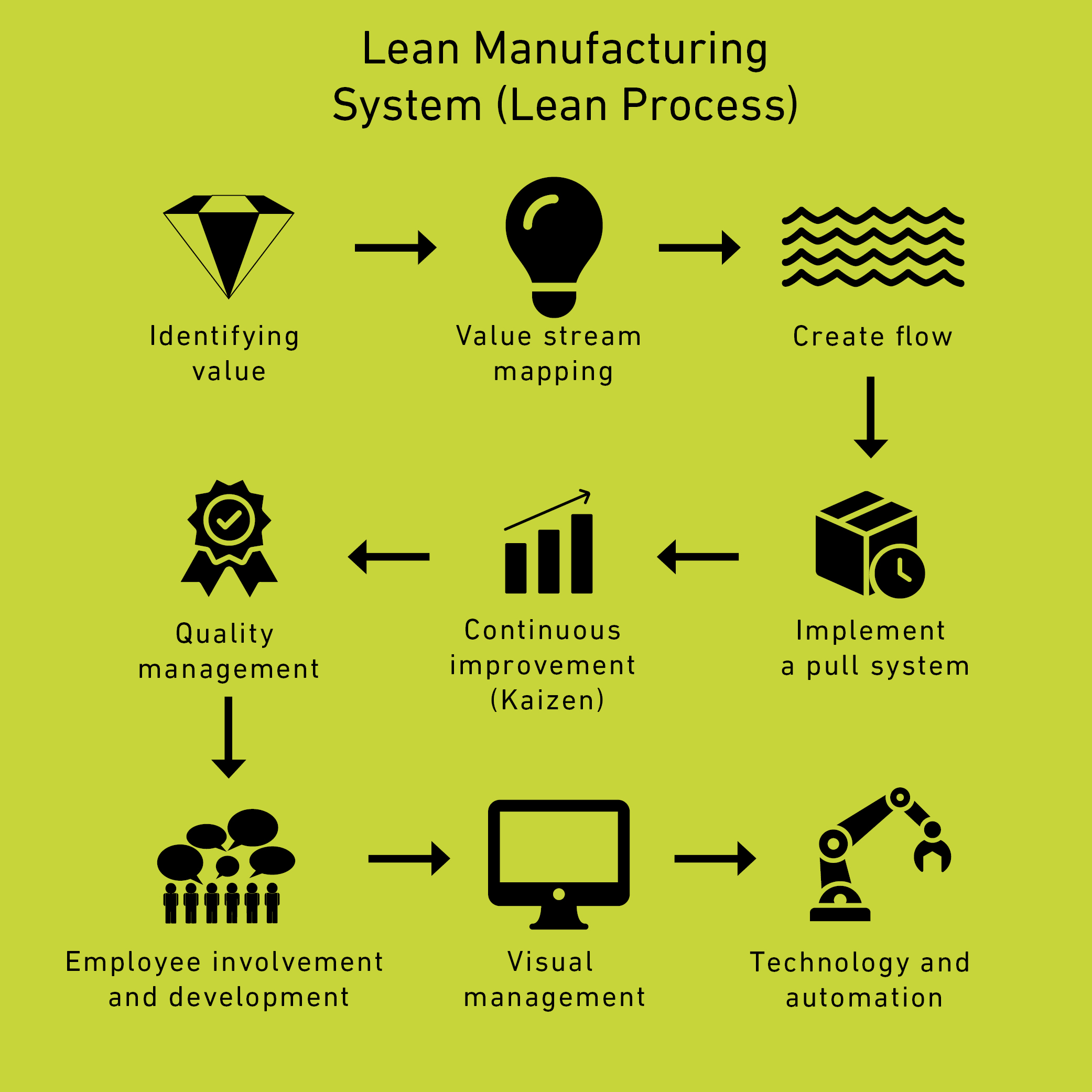
Several methodologies can be used to implement continuous improvement in a production environment. Two of the most popular are Lean manufacturing and Kaizen.
- Lean Manufacturing: Lean focuses on eliminating waste in all its forms, including defects, overproduction, waiting, non-utilized talent, transportation, inventory, motion, and extra-processing. By identifying and eliminating these “wastes,” Lean helps to streamline processes, reduce lead times, and improve overall efficiency. Techniques like value stream mapping, 5S (Sort, Set in order, Shine, Standardize, Sustain), and Kanban are commonly used in Lean implementations.
- Kaizen: Kaizen is a Japanese term that translates to “change for the better.” It emphasizes small, incremental improvements involving all employees. Kaizen events, or rapid improvement workshops, are often used to address specific problems or opportunities for improvement. These events bring together cross-functional teams to brainstorm solutions, implement changes, and measure results. The key to Kaizen is empowering employees to take ownership of the improvement process and encouraging them to suggest ideas for improvement.
Measuring the Success of Continuous Improvement in Production
To ensure that continuous improvement efforts are effective, it’s essential to track key performance indicators (KPIs) and measure the impact of changes. Some common KPIs for production include:
- Overall Equipment Effectiveness (OEE): OEE measures the percentage of planned production time that is actually productive. It takes into account factors such as availability, performance, and quality.
- Cycle Time: Cycle time is the time it takes to complete a production process from start to finish. Reducing cycle time can lead to increased throughput and faster delivery times.
- Defect Rate: The defect rate is the percentage of products that do not meet quality standards. Reducing the defect rate can lead to lower costs and improved customer satisfaction.
- Inventory Turnover: Inventory turnover measures how quickly inventory is sold and replaced. Improving inventory turnover can reduce storage costs and minimize the risk of obsolescence.
By regularly monitoring these KPIs, businesses can identify areas where further improvement is needed and track the progress of their continuous improvement initiatives.
Fostering a Culture of Continuous Improvement in Production
The success of continuous improvement depends on creating a culture that embraces change, encourages employee involvement, and rewards improvement efforts. This requires leadership commitment, training, and communication.
- Leadership Commitment: Leaders must champion continuous improvement and demonstrate their commitment by allocating resources, providing training, and recognizing employee contributions.
- Employee Involvement: Employees at all levels should be encouraged to participate in improvement efforts. This can be achieved through suggestion programs, cross-functional teams, and Kaizen events.
- Training: Providing employees with the necessary training in Lean, Kaizen, and other continuous improvement methodologies is essential for success.
- Communication: Open and transparent communication is crucial for keeping employees informed about improvement initiatives and celebrating successes. Regular communication can take the form of team meetings, newsletters, and visual displays of performance data.
About the Author